
Case Study · Commercial Office · Decorative Lighting
A feature pendant of handmade glass, and a ceiling that had to be ready long before it
A specification still open on dimensions, a client who would not choose a glass tint from a photograph, and a factory shutdown closing in. It is lit and hanging in the building.
The brief
We were appointed to supply the decorative lighting package for a commercial office fit-out in Dubai: a reception, a lift lobby, bathroom areas and the circulation between them, specified as part of a full FF&E package.
The specification was detailed about intent and thin about manufacture. It named finishes to match, called for smoke glass and fluted glass and metal to match a hard-finish code, and set out where each fixture sat on the ceiling plan. What it did not carry, on a good number of the line items, were dimensions or quantities, the columns that a factory actually needs.
We acknowledged it the same afternoon and, before quoting anything, sent the schedule back with the missing fields marked. The first commercial offer followed inside the week. Asking for the gaps first is not slower. It is the only thing that stops a revision cycle later.
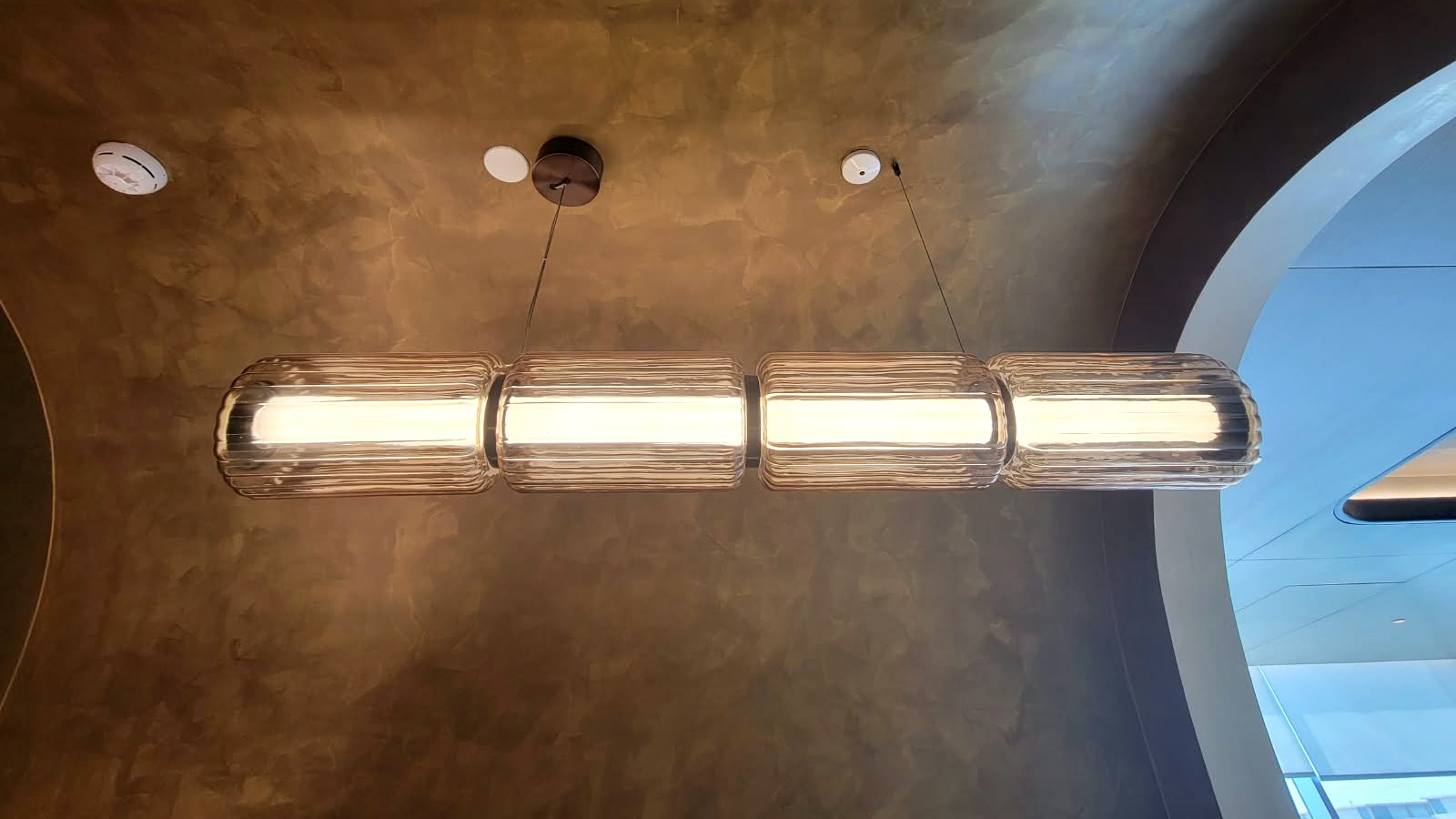
The problem was never the light. It was the ceiling.
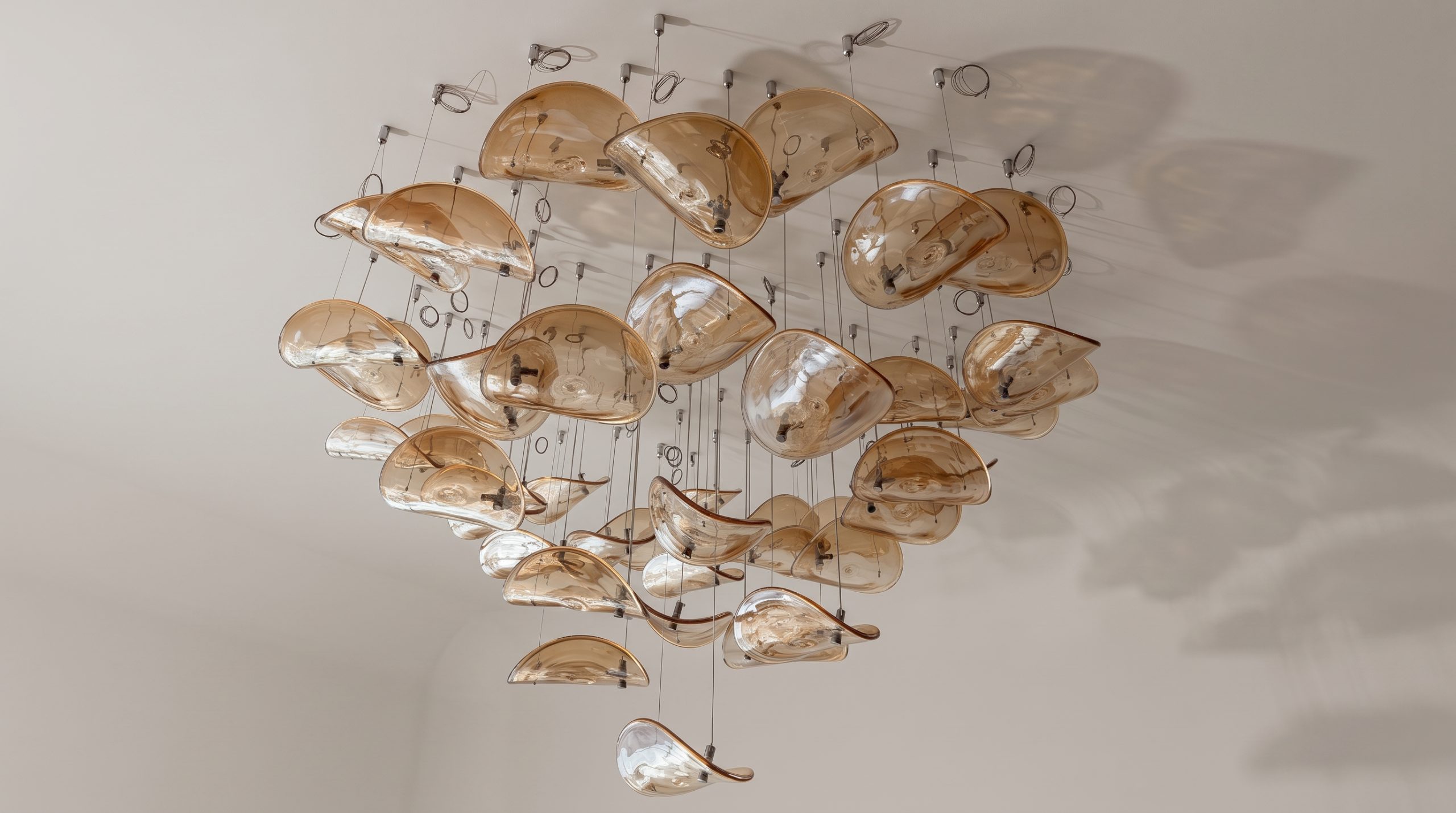
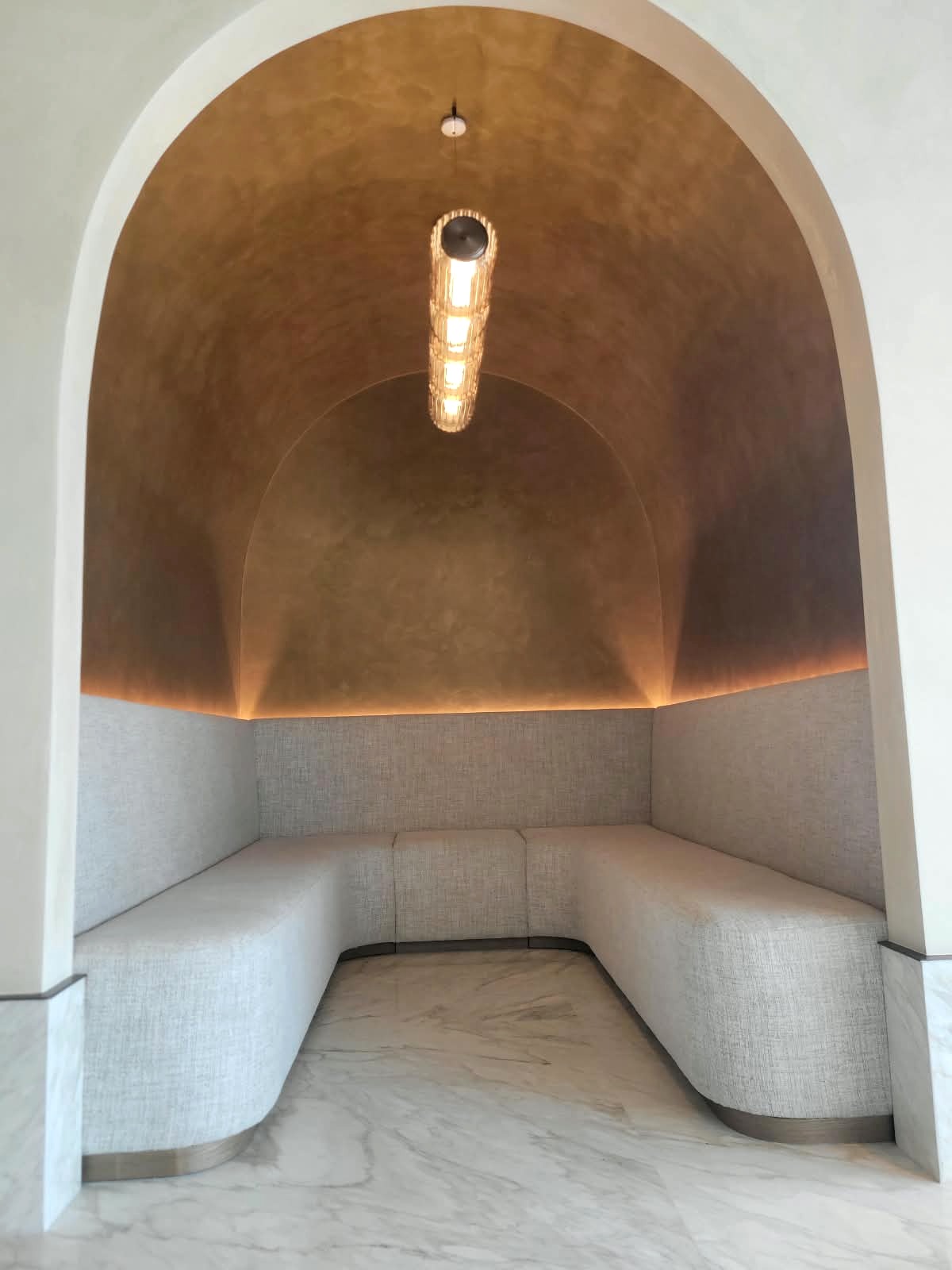
The feature pendant over the reception desk is roughly two metres across, one and a half deep and two metres tall, hung on suspension wires and made of glass.
A fixture like that is not a light fitting hung from a hook. It is a load. It needs a wooden ceiling structure built to carry it, at specific suspension points, and that structure is designed, built and closed by other trades, months before the fixture exists.
Which means the supplier has a deadline nobody writes into the purchase order. If the weight and the suspension-point geometry do not reach the site team before the ceiling is closed, one of two things happens: the reinforcement goes in the wrong place, or a finished ceiling gets cut back open. Both are expensive, and neither is the client’s fault.
So the site team asked for weight and suspension points early, and got them, along with a ceiling reinforcement and wiring diagram, while the fixture was still a drawing.
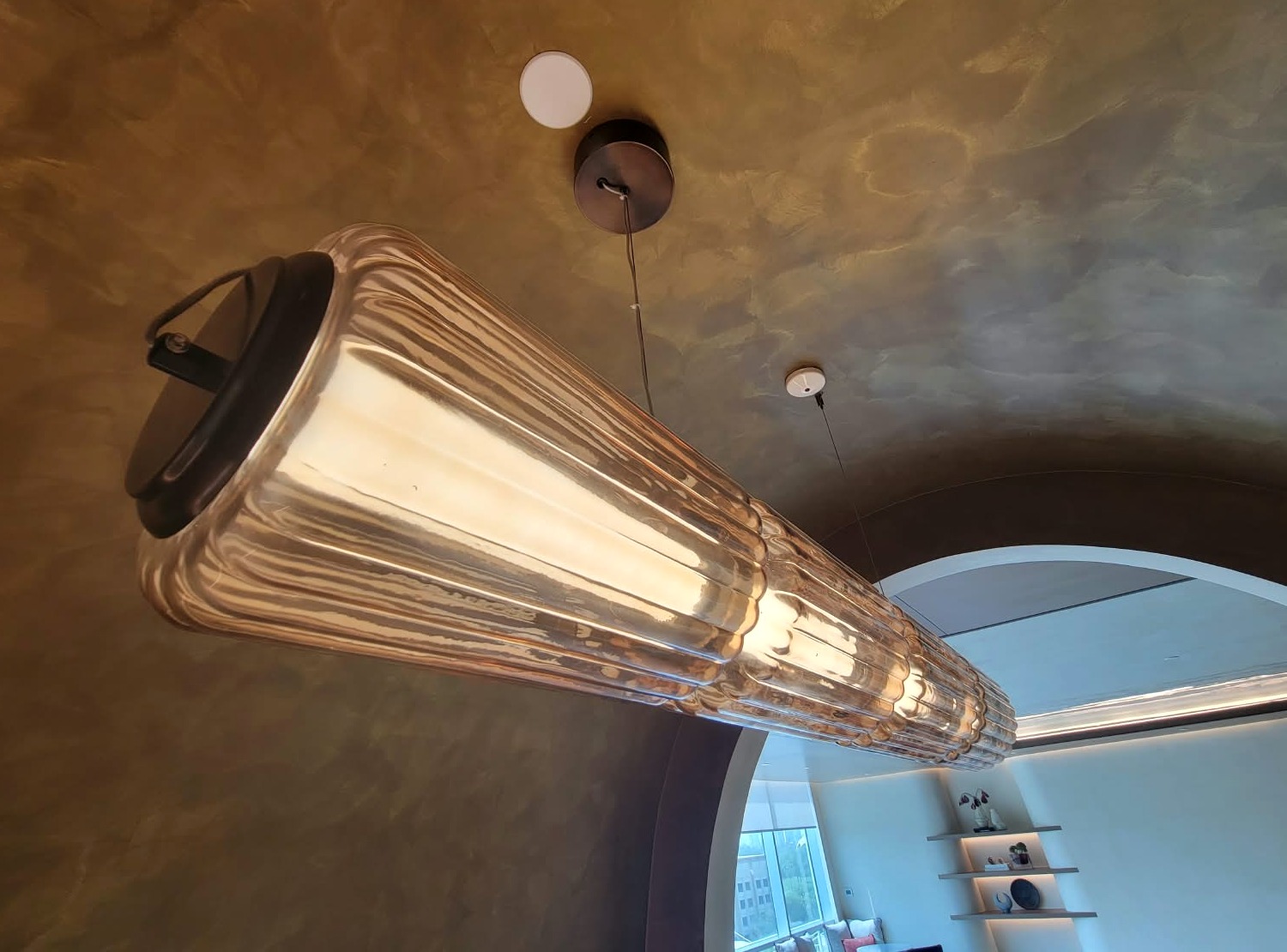
Eight gates, in order
Nothing moves until the stage before it comes back agreed. The gates differ from project to project; the rule doesn’t.
Enquiry, acknowledged the same afternoon
An FF&E specification and a ceiling plan. Answered the same day, with the incomplete fields listed rather than assumed.
Commercial offer
Priced inside the week, line by line against the specification. Numbered revisions followed as scope moved, each traceable to the comment that caused it.
Technical datasheets
Dimensions, materials, finish, light source, colour temperature and driver arrangement agreed in writing before anything was drawn.
Physical glass samples
The glass tint chosen from glass, in the hand, not from a rendering. See below. This is the part of the job that came closest to costing the programme a month.
Load and suspension data, issued early
Approximate weights and the number and position of suspension points, released while the fixture was still a drawing, so the ceiling could be reinforced before it was closed. Followed by a reinforcement and wiring diagram.
Signed drawings
Production released against drawings signed by the client, not against an email. Finish approvals confirmed against the physical sample already in their office.
Factory QA/QC, then our own inspection at source
The factory completes its internal quality process. Then our own person attends the factory and inspects before anything is packed. Two checks, one of them ours.
Packing list, then installation drawings
Packing photographed and listed before dispatch. Fixture-specific installation drawings issued to site: assembly, suspension and connection detail, so nothing has to be worked out on a ladder.
A little under seven months from a specification with gaps in it to the fixtures lit in the building.
Three tints, a flat piece of glass, and a factory about to close
Partway through, the whole programme came down to a colour nobody could name.
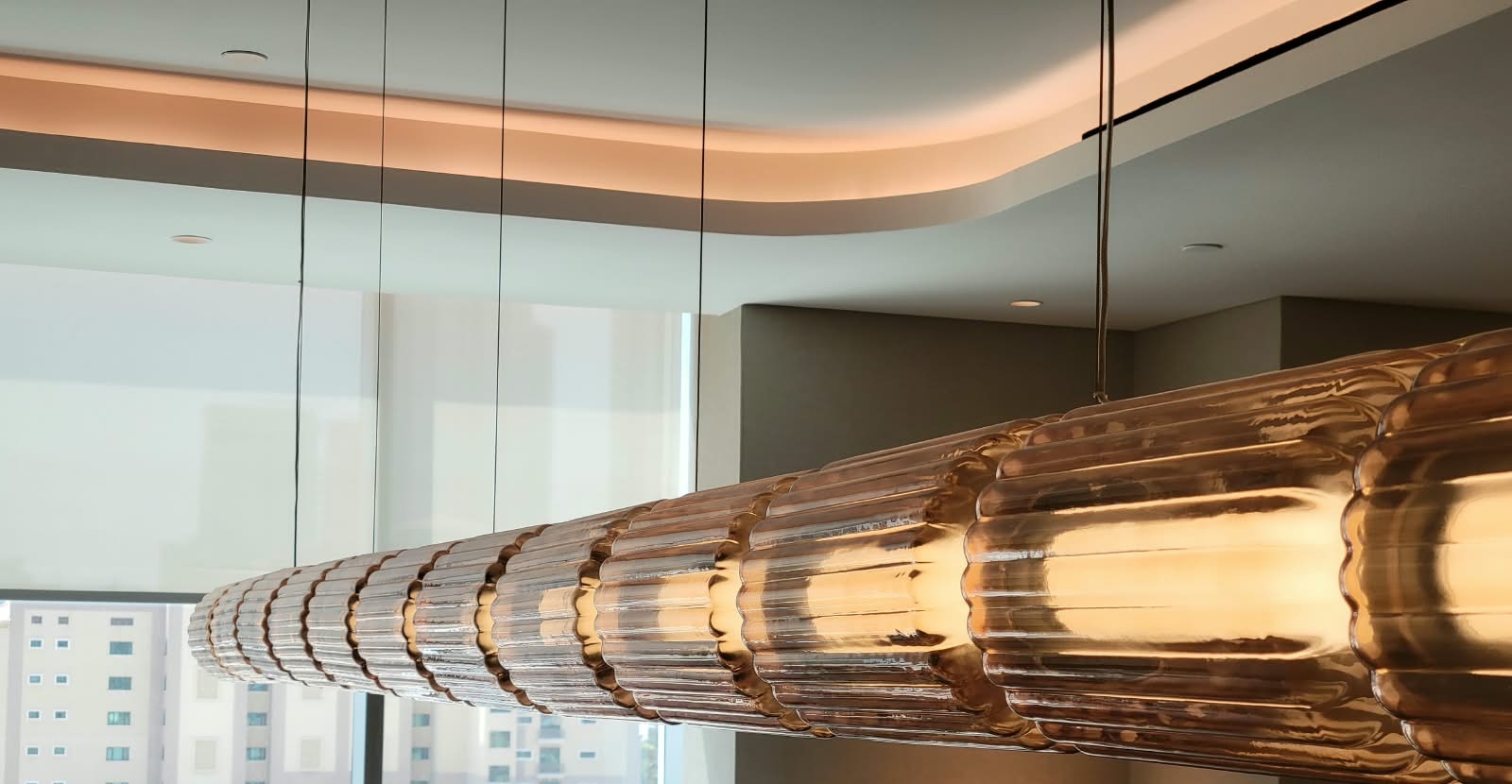
The fixture family running through the fit-out is modular: sections that join into horizontal and vertical runs, each with the lamp inside a diffusing glass sleeve. The specification called for that glass to be fluted, and to carry a brown tint. The client knew the tint they wanted was brown. What they would not do was fix the strength of it from an image on a screen.
What they asked for was a curved, fluted sample in three tint strengths: 10%, 20% and 40%. Entirely reasonable. It was also, at that moment, close to impossible: the factory’s annual shutdown was days away, and curving and fluting tinted glass three times over is tooling work, not sample work. Waiting for the shutdown to end would have stopped the drawings with it.
What we proposed instead
- Flat pieces, roughly 100 mm square, not curved
- Same fluted glass, same three tint strengths: 10%, 20%, 40%
- Made at the factory and shipped ahead of the shutdown, because flat needs no tooling
The curve was never what the client was choosing. The tint was. A flat sample answers the question that was actually being asked, and it can be produced in a fraction of the time. So the client got real fluted glass in the hand, in three strengths, before the factory closed, and picked one.
Alongside it went the other thing the site needed and nobody had asked for yet: approximate fixture weight, and how many suspension points the ceiling would have to carry.
The same principle governed the feature pendant. When its glass leaf came up for approval, the answer back was that the leaf was accepted but the finish had to match the physical sample already sitting in the client’s office, and the leaf itself had to keep the shape in the original specification. Not a photograph of the sample. The sample. That is the correct answer, and it is only available to a client who was sent a physical sample in the first place.
The scope grew, and it grew on paper
Mid-project the client added the feature pendant, a large piece for the reception, outside the original bill of quantities and outside the original order.
It was quoted separately, ordered separately against its own purchase order, drawn, sampled and approved on its own chain, and then produced alongside everything else.
That is the boring answer, and it is the one that protects both sides. An addition handled informally is an addition nobody can point to later when the finish, the size or the delivery date is disputed. This one has a document at every step, and it arrived with the rest of the package.
Two quality checks, and one of them is ours
Every factory runs its own QA/QC. That is table stakes, and it is also the factory marking its own homework.
On this package, once the factory’s internal process was complete, our own person attended the factory and inspected the goods before packing, against the approved drawings, not against a general standard. Only then did the packing list get issued and the shipment move.
It costs a trip and it costs days. It is the difference between finding a problem in a factory, where it can be remade, and finding it on a ceiling in a finished building, where it cannot.
Scope
| Fixture | Specification |
|---|---|
| Feature pendant, reception | Approx. 2000 × 1500 × 2000 mm on suspension wire. Individually handmade glass elements. 3000 K, low-voltage DC, transformer included. Requires a load-bearing ceiling structure |
| Pendant light, modular | Fluted tinted glass diffuser over the lamp, joining into horizontal and vertical runs. Metal to match the project hard-finish reference |
| Pendant lights, suspended | Ø175 mm, glass and aluminium, amber finish, 4000 K. Five body lengths from 1200 to 3600 mm, adjustable drop |
| Wall light, vanity | Stone and metal, 550 × 100 mm, metal to match the project hard-finish reference |
| Wall light, lift lobby | 550 mm length, metal to match the project hard-finish reference |
Specification response, shop drawings, glass and finish control, load and suspension data, quality protocol and inspection at source: Arclite Middle East, Dubai. Production commissioned from a partner workshop to the approved drawings. Supply scope; installation by others. Warranty terms are issued per project by Arclite Middle East.
Where it is now
Installed, connected and lit.
It is the shortest way to say what this whole process is for: the thing in the ceiling is the thing on the approved drawing.
Holding a decorative package with gaps in the specification?
Send us the FF&E schedule and the ceiling plan, including the parts that aren’t finished. You’ll get the missing fields listed back before anyone prices anything, and load data early enough to be useful.
Talk to usA note on this page. The client, the end user, the design practice and the production facility are not named. Specifications, dimensions and the sequence of events are taken from the project’s own document and correspondence record. Photography is from the finished installation, corrected for exposure and crop only. The one exception is the feature pendant, which is captioned as another installation of the same design.
